
17 Must-Have Travel Apps Recommended by Frequent Travelers
Planning a trip can quickly become overwhelming when faced with countless app options promising to simplify travel. This guide cuts through the noise by highlighting 17 essential travel apps recommended by seasoned travelers and industry experts who have tested them in real-world conditions. From finding unique accommodations to translating foreign menus on the spot, these tools address practical challenges that frequent flyers encounter most often.
- Coordinate Multicity Schedules Track Budgets
- Assess Forecasts Across Detailed Layers
- Link Tanzania Routes For Seamless Transfers
- Translate Menus Instantly By Photo
- Generate Day Plans From Priorities
- Use Transit Guidance With Live Arrivals
- Chart Drives Reveal Hidden Stops
- Leverage Offline Maps Gain Local Insight
- Pair Regions Pick Trusted Services
- Anticipate Delays Act On Timely Alerts
- Refine Briefs Unlock Overlooked Options
- Centralize Bookings Preserve Mental Bandwidth
- Anchor Attention Through Adaptive Soundscapes
- Watch Truthful Clips Find Thrifty Ideas
- Document Journeys Seek Odd Attractions
- Choose Distinct Stays Beyond Hotels
- Simplify Rides Yet Protect Privacy
Coordinate Multicity Schedules Track Budgets
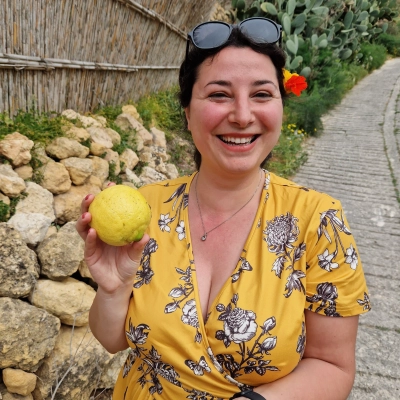
My husband and I have been using Wanderlog for the past three years, and honestly, I can’t imagine planning a trip without it. As travellers who love multi-city itineraries, this app has been a complete game-changer for how we organise our trips.
What makes Wanderlog so useful is how everything lives in one place. We can store all our tickets, bookings and reservations, plan each day step-by-step, and even optimise our daily routes to visit places in the most efficient order. The map view is especially helpful because it lets us easily group attractions by location, which saves both time and energy during busy travel days.
We also use Wanderlog to plan and track our travel budget — starting with estimates and updating with actual costs as we go. It keeps us organised, helps us plan realistic daily schedules, and ensures we stay on top of spending throughout the trip.
The app has completely replaced spreadsheets for us, makes collaboration seamless between the two of us, and keeps all travel plans structured and accessible — both on desktop and mobile.
We’ve used Wanderlog to plan complex trips including our 16-day itinerary around 6 countries in Europe, our 12 days trip around Morocco, or our 10 days around Canada trip.
If you love staying organised, planning efficiently, and keeping your trip and budget in one place, Wanderlog is an app every traveller should know about. I would 100% recommend it.
Assess Forecasts Across Detailed Layers
One of my favourite and most necessary travel apps is Windy! Getting good weather predictions is essential for travel planning, especially in the kinds of destinations we at Randomtrip prioritize (beaches, islands, nature, hiking, etc.)
Although you can get a quick summary of the weather forecast easily on your smartphone or through a quick search on Google, these are normally too simplified and do not always tell the whole story. With Windy, I’m able to see the forecast for different phenomena (wind, clouds, waves, rain, etc.), which allows me to prioritize plans for the next few days that heavily depend on the weather. They also include a layer with live webcams that can be very useful to see the real weather “live” in some destinations.
Of course, weather predictions are not 100% correct all the time; they are just a tool, but so far, Windy has been the most accurate tool to use during our trips.
If you give it a try, take into account that it might not be super user-friendly at the beginning, so I recommend searching for some video tutorials to get the basics.

Link Tanzania Routes For Seamless Transfers
Nothing beats Rome2rio when you’re trying to figure out logistics in Tanzania.
I use it constantly to plan connections between Arusha, Serengeti, and Zanzibar. Once, a guest missed a bus from Arusha to Moshi — Rome2rio instantly showed an alternative route with private shuttle options. We got them to Kilimanjaro National Park with zero stress.
It’s simple but powerful: flights, buses, ferries, even local shuttles all in one place. Offline maps and schedules mean you’re not stranded if cell service drops. For travelers in Tanzania, where remote lodges and safari transfers are the norm, this app saves time, reduces stress, and keeps the adventure rolling smoothly.

Translate Menus Instantly By Photo
Google Translate is a must for me on international trips because of its image translation feature. I reach for it the most in restaurants. I’ll snap a picture of the menu and upload it. Within seconds, I’ve got a fully translated version right on my phone screen. The same process can be helpful in airports, on streets, or anywhere you need to read a sign.

Generate Day Plans From Priorities
My favorite travel app right now is Wonderplan, because it quickly turns your preferences into a clear, day by day itinerary. It is especially useful for busy travelers who want help organizing hotels, activities, and timing in one place. The key is to enter your goals and priorities upfront so the recommendations match your style and budget. I still advise travelers to verify key details directly with airlines, hotels, and operators before booking, since app information can sometimes be out of date.

Use Transit Guidance With Live Arrivals
I discovered the Moovit app last year after moving to Spain, and I wish I had known about it sooner. It has been very helpful for navigating the city using public transportation. The app shows available routes, real-time bus arrival times, and step-by-step directions, which makes getting around easier.

Chart Drives Reveal Hidden Stops
I love RoadTripper.com and couldn’t plan road trips without it. Not only does it help me visualize my route, it shows the time/distance between stops and suggests other places (often hidden gems that I didn’t know about) that I might want to add to my route. It’s also helpful for finding hotels and restaurants during my travels. I’ve really come to depend on it.

Leverage Offline Maps Gain Local Insight
One of my favorite travel apps that every traveler should have is Google Maps. You can use it offline, which is very helpful. Download a region before your trip. Then, you can navigate without worrying about roaming charges. It provides more than directions. You’ll find restaurant reviews, opening hours, photos, and local hidden gems. Real-time traffic updates and Street View previews make trip planning easy. You can also save lists of favorite places, which help with on-the-ground exploration. You can even share your live location with travel companions for added safety. It’s like a pocket-sized local guide you can use anywhere you go.

Pair Regions Pick Trusted Services
Which apps are best depends largely on where I am. I use them when ride hailing in Southeast Asia, especially in Manila and Bali. During a torrential downpour in Manila last September, Grab’s fixed price and in-app driver chat got me to the airport when other apps were telling me there were no cars. In Central and Eastern Europe, Bolt is cheaper than Uber at almost every hour of the day (not to mention that it’s the only one I turn on after 10 p.m. in Vilnius and Tallinn).
In South Korea, I had great success with Kakao T, and it easily connects to Kakao Maps for accurate station pickups. For eating in Japan: Tabelog lets me locate local places and encourages me to eat at small spots such as a yakitori counter in Nakameguro. In Spain and France, TheFork is the easiest way to make reservations. For China’s mass transit, Amap offers reliable subway routes and exit numbers, saving us a lot of long walks.

Anticipate Delays Act On Timely Alerts
Flighty is the travel app I recommend to anyone who flies regularly, even occasionally.
The core function is flight tracking, but that undersells it. Flighty gives you real time gate changes, delay predictions before the airline makes an official announcement, push alerts timed well enough that you actually have a chance to act on them, and a clean view of your upcoming trips without any of the noise that clutters most travel apps.
What makes it genuinely useful is the prediction engine. It sources data from multiple feeds and tells you a flight is likely to be delayed before the board shows it. I have had about thirty extra minutes twice because I caught a delay early enough to grab food or rebook a connection.
The design is also worth mentioning. Most travel apps feel built by people who have not thought carefully about where you are actually using them. Flighty feels like it was built for airports, which means large tap targets, fast loading, and information prioritized by what you actually need in the moment.
For anyone building tools where timing matters, which for me is cloud pricing, Flighty is a useful product to study. The question it answers is not just what is the data but when do I need to know this and what should I do about it. That framing is harder to get right than the data itself.

Refine Briefs Unlock Overlooked Options
My favourite travel “app” right now is not a traditional app at all, it is using ChatGPT as a custom deep research tool. During peak season in Osaka, hotels near my target postcode were either booked out or overpriced, so I fed in a tight radius, budget, walking distance, and late check-in constraints, and it surfaced a private sleep booth in a manga cafe that solved the real problem. What makes it powerful is that you can redefine the brief in real time and explore overlooked options instead of scrolling the same aggregator results. Used well, it becomes a custom travel planner built around your exact context, not just generic rankings.

Centralize Bookings Preserve Mental Bandwidth
Travel is not often a leisure in the running of MacPherson Medical Supply. It is meeting with the vendors, visits to the facilities, and the case of a last-minute manufacturer audit. My most frequently used application is TripIt as it allows me to organize all flights, hotel bookings, and rental cars in one clean timeline without any additional clutter. Send a confirmation message and it automatically constructs the itinerary, thereby saving even small amounts of time that will accumulate in a month of travelling.
The usefulness is not in the interface. It is the decongestion of the mind. I do not want to have to search five inbox threads and confirm a gate change or hotel address when I am at a hospital system in another state to review supply agreements. It is all available in one location and even backup flight options. In one visit to three cities in four days, where they made one close trip, that single dashboard was the difference between missing a connection and having to reschedule a contract meeting that was pegged on six-figure annual revenues.
Operational focus in a business is always constant, and the best travel tools are those that stir no noise; hence, the focus remains where it is supposed to be.

Anchor Attention Through Adaptive Soundscapes
We tend to over-index on the logistics of displacement, optimizing flight connections and hotel check-ins, while neglecting the far more expensive cost of travel: the fragmentation of cognitive continuity. The amateur traveler manages the itinerary; the veteran manages the nervous system. Consequently, the most indispensable tool in my stack is not a booking aggregator, but an AI-driven soundscape generator like Endel. While others are solving for location, I am solving for environmental consistency.
The mechanism here is psychoacoustic anchoring. By deploying personalized, algorithmically generated soundscapes, you effectively decouple your cognitive state from your physical environment. Whether I am in a chaotic airport lounge or a sterile hotel room, the auditory input remains constant. This stabilizes the circadian rhythm and drastically reduces the “vigilance tax” the brain pays when scanning new environments for threats. Instead of wasting energy processing the unfamiliar hum of a foreign HVAC system or the chatter of a lobby, the brain recognizes the auditory cue and immediately downregulates.
Too often, we treat travel as a period of suspended animation where we accept brain fog as the price of admission. This is a failure of design. I have found that true resilience isn’t about powering through the chaos of transit; it is about carrying a portable sanctuary with you. When we architect our sensory inputs, we stop surviving the journey and start inhabiting it, arriving to our families and teams not just on time, but fully intact.

Watch Truthful Clips Find Thrifty Ideas
My favorite travel app is TikTok. I use it to learn about destinations and to hear other travelers’ real experiences. Searching “best things to do in [location]” surfaces short videos that highlight both popular attractions and affordable or free options shared by locals. That blend of honest, visual reviews and practical ideas makes it easy to discover hidden gems and plan trips that suit different budgets.

Document Journeys Seek Odd Attractions
I love this question because I think the best travel apps are not just about booking flights or finding directions. They are the ones that change how you experience a place or how you remember it afterwards.
Two that really stand out to me are Polarsteps and Atlas Obscura.
Polarsteps is brilliant because it automatically tracks your journey and turns it into a clean, visual travel diary. You don’t have to constantly check in or post. It quietly maps your route and lets you add photos and notes along the way. At the end of a trip, you have a beautifully documented story of where you’ve been.
Atlas Obscura is completely different. Instead of showing you the usual tourist attractions, it highlights unusual, hidden, and often quirky places. Secret tunnels, strange museums, forgotten corners of cities. It changes how you explore because you start looking for stories rather than just landmarks.
I’m a wildlife photographer, so travel is a big part of my life. I’m always looking for tools that help me both document the journey and discover places with character and story, not just the obvious highlights.

Choose Distinct Stays Beyond Hotels
My favorite travel app is VRBO. What makes it so useful is the way its memorable ads and listings highlight very unique homes, which caught my attention on social media. Those ads arrived just as travel demand rebounded and prompted me to search for rentals like houseboats or homes built into caves. The app’s ability to inspire unexpected ideas and direct me to distinctive rental options is what I value most.

Simplify Rides Yet Protect Privacy
My favorite travel app is ride-hailing services such as Uber or Grab. They are useful because they consolidate trip coordination and payment details in a single app, simplifying how you arrange and pay for transportation while traveling. At the same time, these apps track where you go, when you go, and how you pay for your rides. They are mostly safe, but that data can be shared with advertisers or other companies, so travelers should be mindful of privacy settings and data-sharing choices.